SURFACE · THE ROBOTICS JOURNEY, PART 1. By Richard Hurley and Trey Caylor, Chevron Technology, Projects & Execution, and Viktor Klein, 8scale. Sixteen pages, free, no form.
Download the reportOVERVIEW
Work at heights in the energy sector is scheduled by code and triggered by corrosion. Part 1 of The Robotics Journey, written by Richard Hurley and Trey Caylor of Chevron's Technology, Projects & Execution team with our analyst Viktor Klein, puts a price on that work and scores the methods used to do it. What follows is our reading, including where we expect adoption to stall.
The report opens on four asset classes and the cycles that send people up the structure. API 653 and API 510 call for external inspections every five years and internal ones on cycles of ten years or more. Turnarounds every three to five years are where columns and piping get their work. Corrosion under insulation adds the unscheduled part.
The spend is modelled, and the model is printed. The report estimates 350,000 large storage tanks, 22 million pressure vessels and 400,000 process columns worldwide, and derives annual spend on elevated work of $4.2 billion for tanks, $23.1 billion for vessels, $7 billion for columns and $9.5 billion for elevated piping. For tanks, vessels and columns the figure is fleet times event frequency times a blended cost per event, with the assumptions in the sources chapter; piping is measured in miles and modelled from turnaround work instead. Added up in the report's own numbers, the four classes come to roughly $44 billion a year. Downtime at hundreds of thousands to millions of dollars a day is what makes that sum worth reducing.
Page 8 carries the five axis method the series uses throughout: safety, productivity, maturity, economics and code compliance, each scored 1 to 5 against a written guideline. Safety follows the hierarchy of controls, productivity is outage reduction, economics is payback.
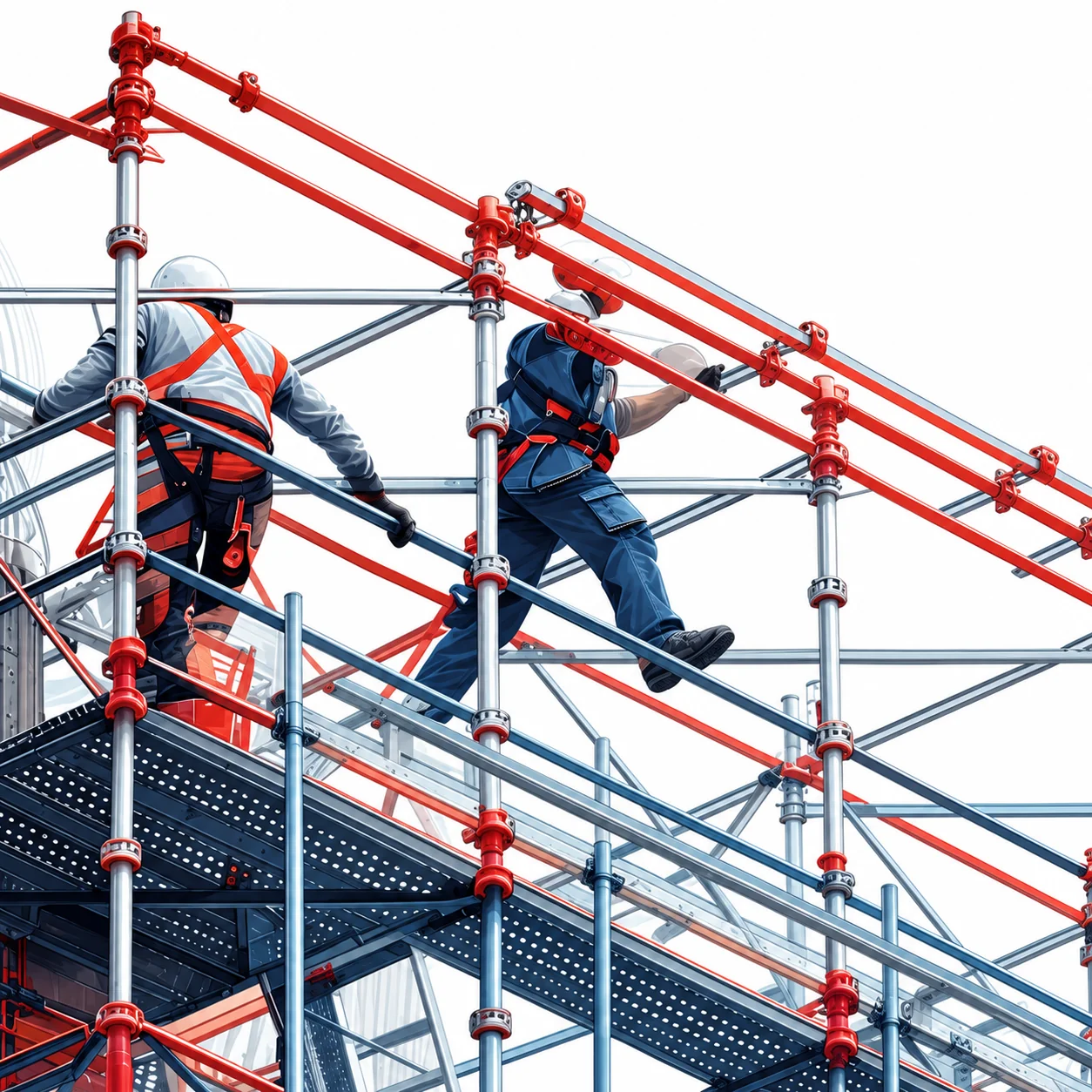
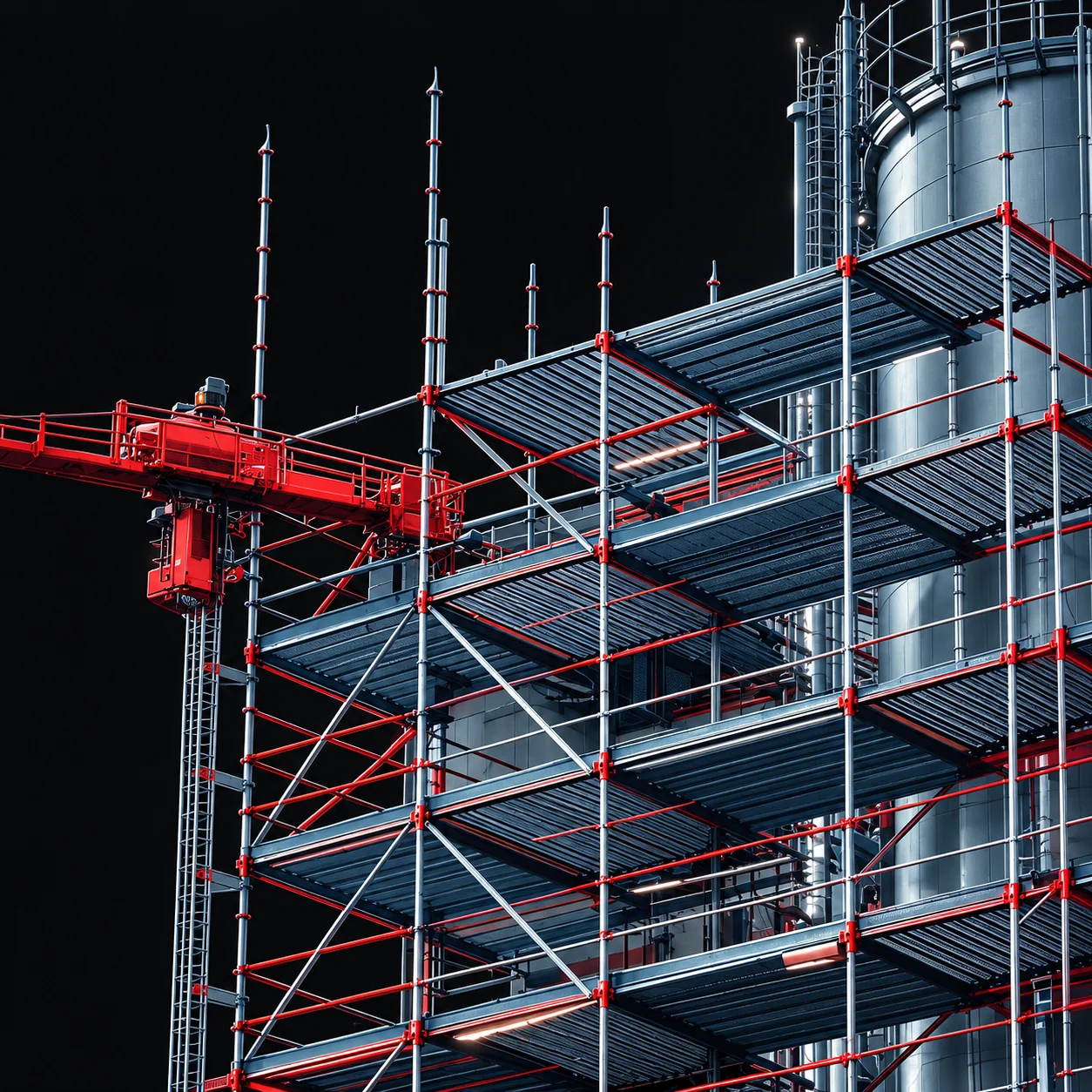
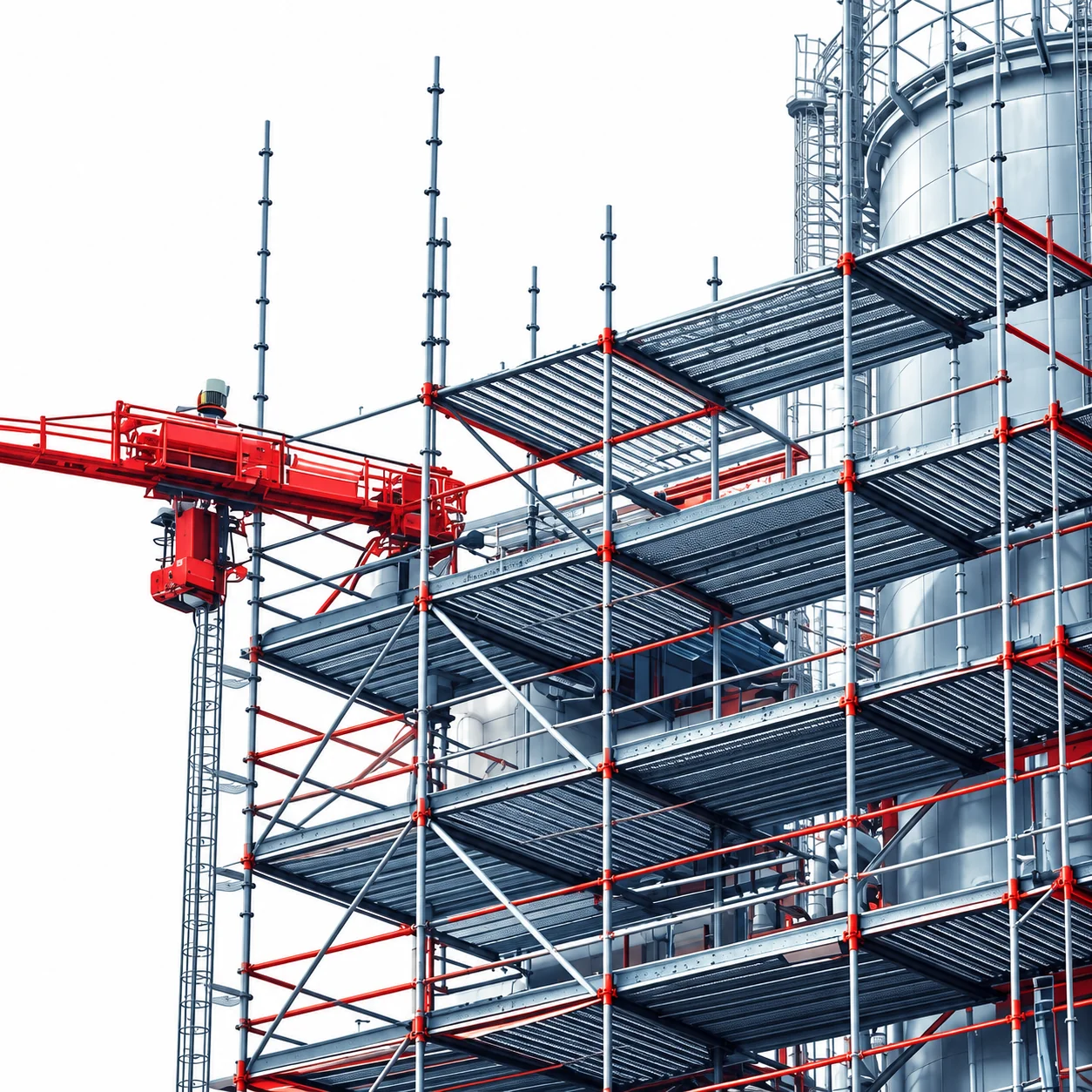
External scaffolding gets maturity 5 and code compliance 5, because the vendor pool is global and OSHA 1926 Subpart L governs every plank. It gets safety 3, because the fall hazard remains and the platform adds dropped objects and collapse, and productivity 2 and economics 2, because build and strike take days and the money buys access only. Internal scaffolding in confined spaces drops to safety 2, productivity 1 and economics 1. The report calls it the slowest and most expensive access option in the set.
A baseline scored this carefully is what makes every robot score on the following pages worth reading.
OVERVIEW
OVERVIEW

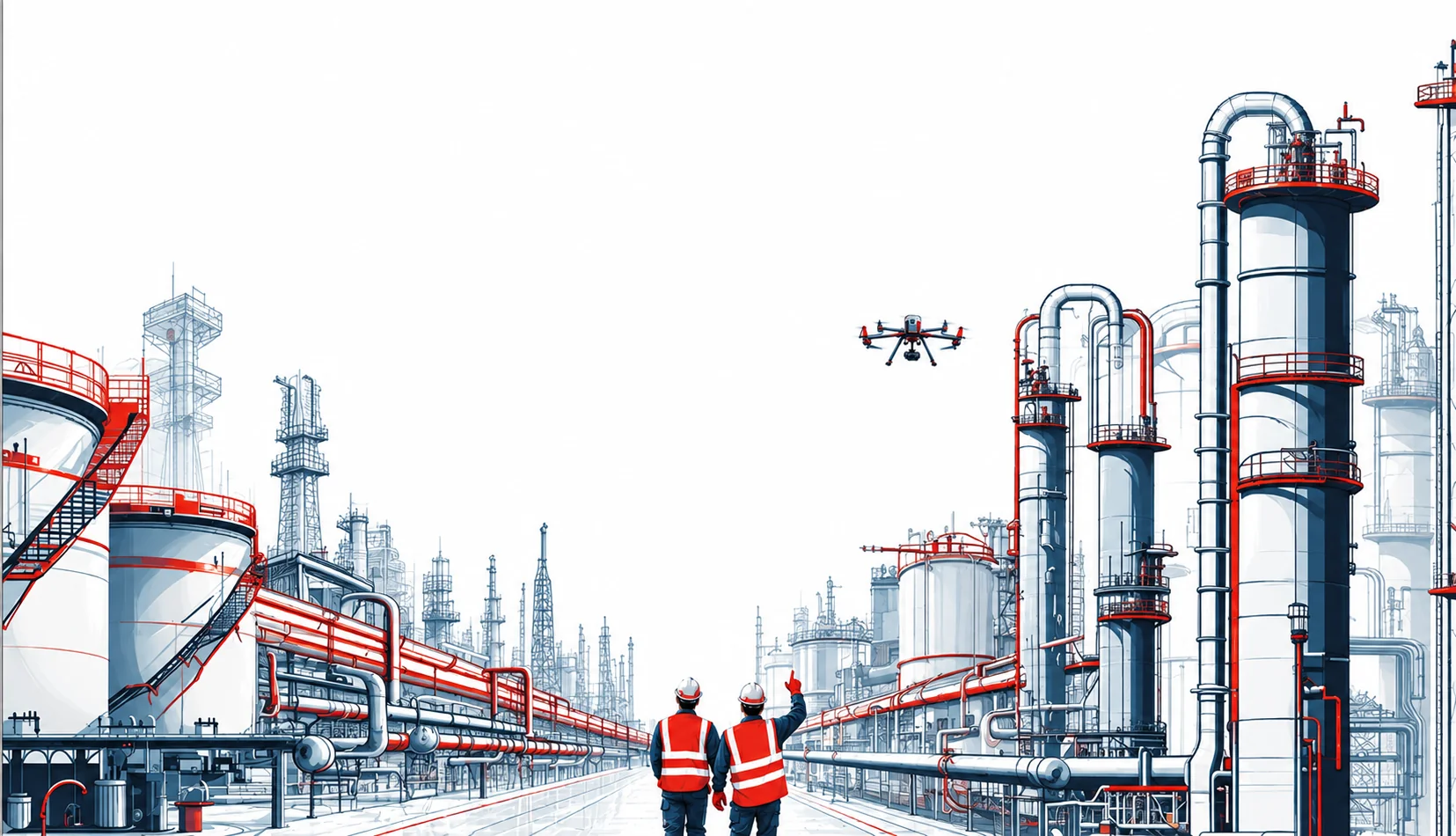
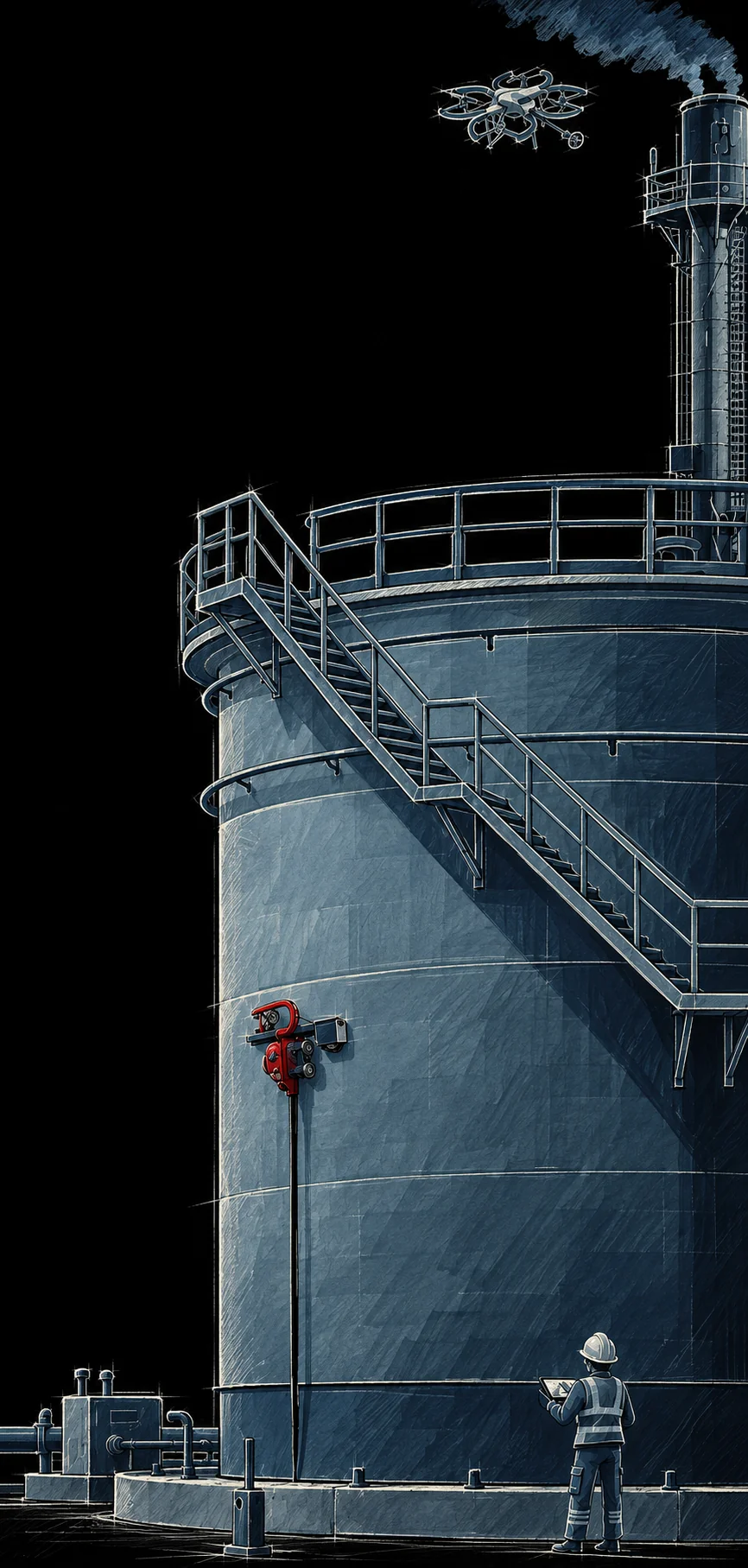
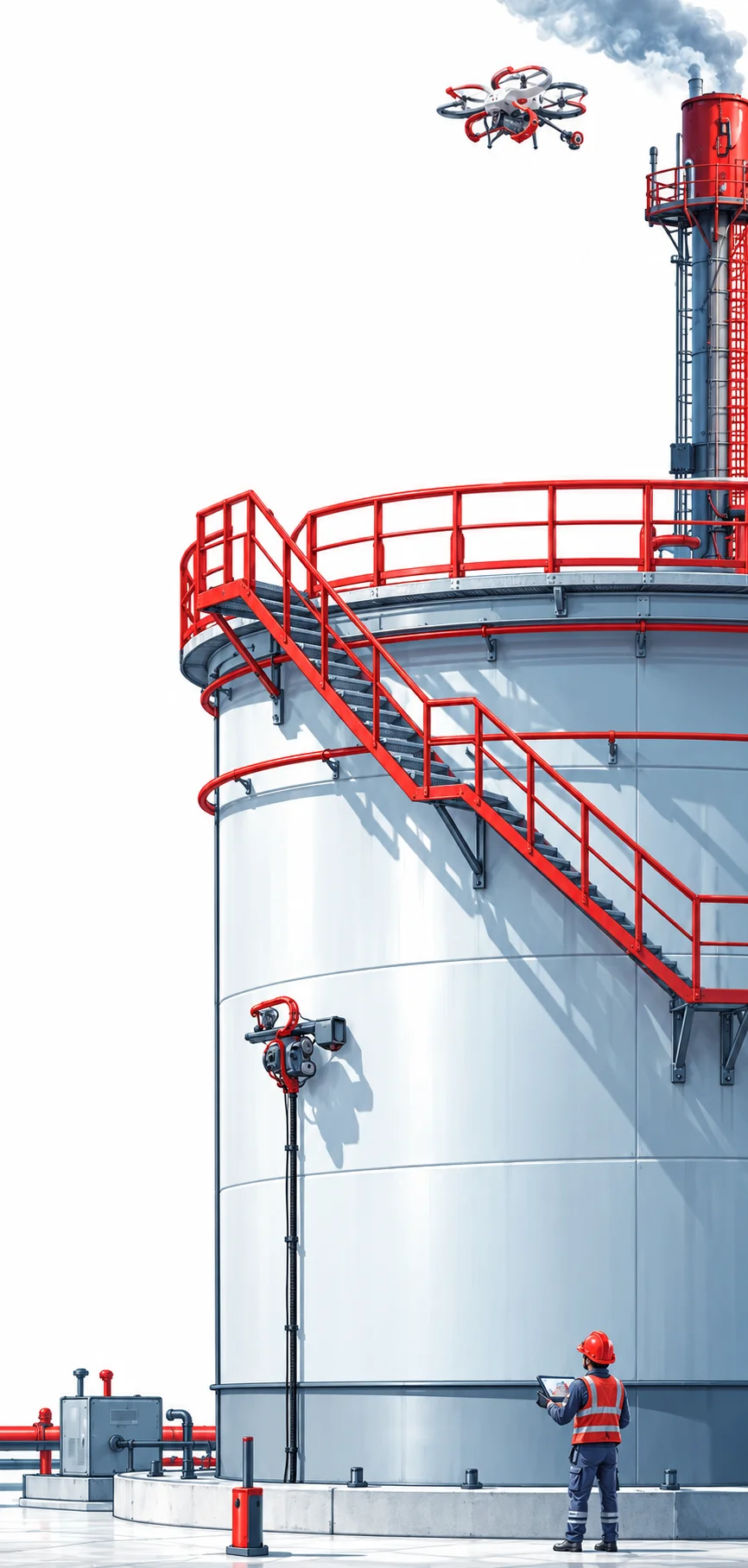
The report orders the technology by how much of the human it removes. Drones with visual and thermal cameras inspect flare stacks, tanks and columns while the asset runs, and an inspection that took weeks on scaffolding can be done in a day. Caged drones and magnetic crawlers take the first visual look inside tanks and vessels, which the report credits with cutting inspection downtime from over a week to a matter of hours.
Measurement follows. A UT drone sets up in under 30 minutes, flies up to 15 minutes and reads wall thickness on a live flare stack at up to 260 °C. A UT crawler covers a square metre in under ten minutes and returns several thousand data points for it, a full C-scan where inspectors on a scaffold took readings on a grid. That record is what lets an RBI programme extend intervals on healthy assets. Pulsed eddy current on crawlers and drones screens for corrosion under insulation without stripping the jacket, and the report puts the robot at 13 times the speed of the conventional route.
The last rung is physical work. Cleaning crawlers with waterjet lances set up in two to four hours on a tank shell, manipulators retrieve foreign objects from confined spaces, and newer platforms grind and coat at height. The report is candid that this rung decides the value case: a finding that still needs a scaffold to fix keeps the mobilisation on the bill.
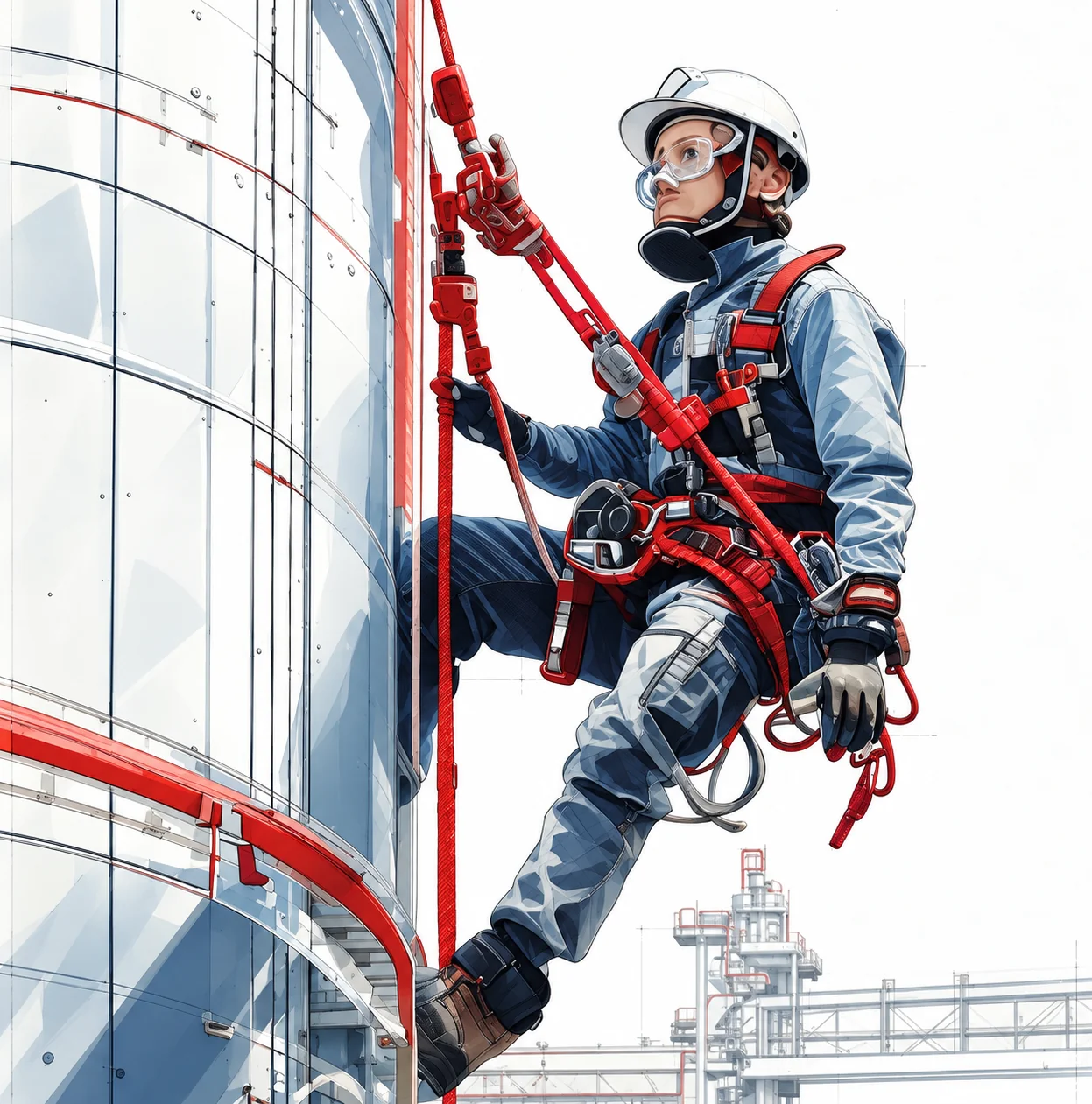
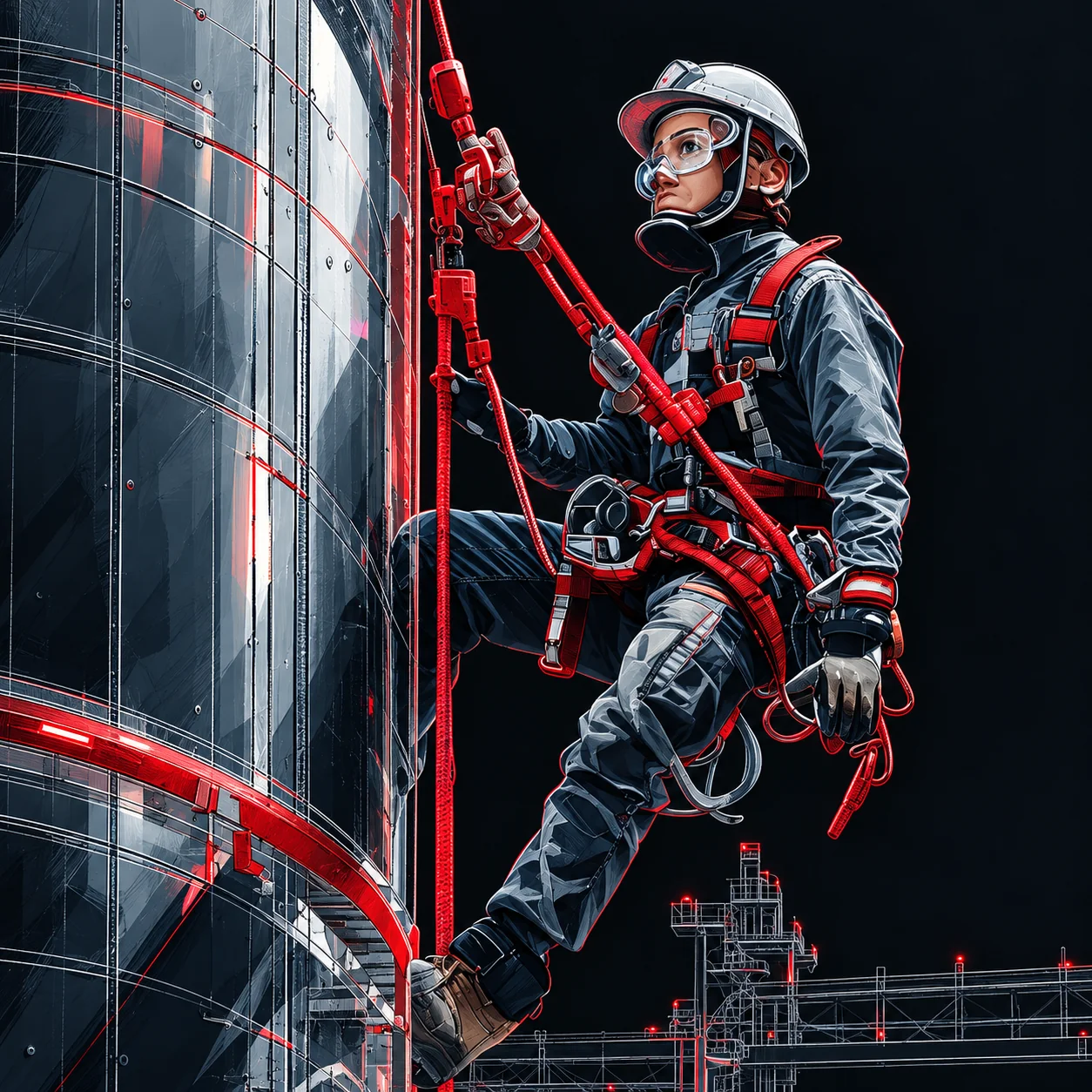
The report quantifies the hazard before it introduces the tool. Human factors contribute to nearly 90 percent of fall related accidents, citing EU-OSHA, and NIOSH data puts an estimated 60 percent of confined space fatalities on the would-be rescuers. In an oxygen deficient atmosphere, brain damage or death can follow within four minutes. Working at height inside a confined space stacks both hazards, and on the risk matrix that combination sits where the only accepted mitigation is to stop the unit.
The first steps keep the technician and remove the climb. Chevron deploys a battery powered lifting bot at many sites to carry equipment up the structure, which cuts the trips that fatigue people. Manway mounted arms with cameras and high pressure lances clean and inspect vessels from outside. Each step is placed on the same matrix, with probability and impact moving together, and that is the format we would want to see in every vendor deck.
OVERVIEW
OVERVIEW
The evidence is strong where the report sets it. Documented case studies report up to 98 percent reductions in inspection time and single event savings on the order of €450,000 for a boiler inspection. API standards now carry provisions for in-service robotic inspection under defined conditions, so the compliance question has an answer on paper. The report names the common pushback as human, meaning jobs, habit and the fear that a new device fails in a new way, and treats each as an input to management of change.
Our reading starts one page earlier. The scoring hands scaffolding two perfect marks because the scaffold also carries the painter, the welder and the cleaning crew. A drone that finds the defect and leaves the repair to a scaffold has shortened the inspection and left the turnaround plan where it was. Until the physical rung matures, the savings sit in inspection hours, and inspection is bought by the hour. The supplier that removes hours removes its own invoice. The report's KPI list, personnel hours at elevation eliminated and turnaround critical path days saved, is the right one, and it starts to bite the day it is written into a service contract. That is the slow variable, and it sets the pace of the rest.
One thing worth doing this quarter. Take your next turnaround, list every elevated event by asset class, and mark which ones end in a measurement and which ones end in a repair. Price only the first group against the drone and crawler rates in this report. If that number does not move the critical path, the case is not ready, and nobody should pretend it is.
THE REPORT
Richard Hurley is Senior Robotics Engineer and Trey Caylor is Robotics Program Manager in Chevron's Technology, Projects and Execution organisation. Viktor Klein is the named analyst at 8scale, the market intelligence layer between industry, technology and innovation, and the publisher of Scalebook.
Special thanks to Vasu Pillai, Brandon Baylor and Mauricio Calva (Chevron); Timo Müller (Voliro); Nikita Iliushkin (Skygauge Robotics); Thomas Joergensen (CLIIN Robotics). Valuable input from Skydio, Flyability, ScoutDi, Eddyfi Technologies, Bilfinger, TEAM Industrial, Energy Drone & Robotics Coalition and Sprint Robotics.
For the market behind these use cases, see Scalebook 2025, Inspection & Maintenance Robotics. Part 2 of the series, drone in a box, picks up where the elevated work ends.
OVERVIEW
OVERVIEW
This report may contain forward-looking statements, predictions, or opinions about future technological and market developments. These statements are based on assumptions and market signals available at the time of writing. Actual outcomes may differ due to risks and uncertainties. All figures, market estimates, and forecasts are based on proprietary analysis and publicly available sources at the time of publication.
cite as: Hurley, R., Caylor, T. and Klein, V. (2026), The Robotics Journey Part 1: working at heights, Chevron / 8scale